Hedge Trimming in Yeading

Hedge trimming in Yeading should leave boundaries neat, healthy and well proportioned, whether the work is for a front garden, rear boundary, shared access line or a taller screening hedge. Our service focuses on shaping, reducing overgrowth and keeping hedges managed so they continue to look deliberate rather than untidy. We work with the practical aim of keeping growth under control while respecting the natural form of the plant.
Well-trimmed hedges can do more than improve appearance. They help maintain light, preserve usable space and keep paths, driveways and garden edges easier to use. Regular trimming also supports better long-term structure by avoiding the kind of uneven growth that can make future cutting more difficult. If you need a tidy finish or more involved reduction work, we can discuss the most suitable approach and prepare a quotation.
Our service is centred on clear, careful hedge work rather than unnecessary disturbance. For many properties that means keeping the top line level, easing back the sides, correcting shape after a missed season and taking account of height, thickness and access. When you are ready, request a quotation and share the basics of the hedge so the next step is straightforward.
Trimming, shaping and seasonal hedge care
Different hedges need different treatment, and a good trim starts with knowing the purpose of the hedge itself. Decorative garden hedges usually benefit from more regular shaping, while screening hedges may need a lighter, less frequent cut that preserves coverage. We can trim for a clean outline, reduce soft new growth or carry out more substantial tidying where the hedge has become uneven or pushed out into paths and beds.
The right result is often a balance between appearance and plant health. Cutting too hard at the wrong time can leave gaps or reduce the hedge’s ability to recover neatly, while leaving growth too long can make the next visit more difficult. That is why our work is planned around the current condition of the hedge, the desired finish and how much material needs to be removed.
For customers comparing options, it can help to think in terms of finish, frequency and height. A light tidy, a controlled reshape and a stronger reduction are not the same task, and they do not always suit the same hedge species. If you are unsure what level of trimming is appropriate, we can assess the situation from the details you provide and guide the quotation process.
Hedge reduction for overgrown boundaries
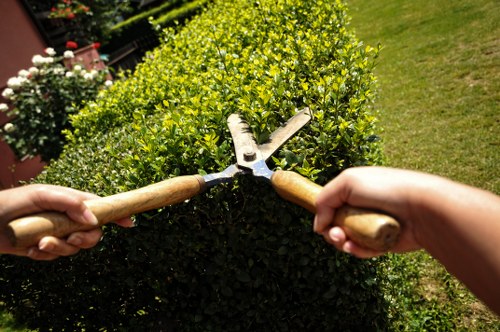
When a hedge has outgrown its space, trimming may need to become reduction work. This is often about bringing the hedge back within safe and useful limits rather than simply neatening the surface. We can work on height, spread and protruding sections so the hedge sits more comfortably against fences, walls, garden edges or access routes. The aim is to keep the hedge practical without stripping away more than is needed.
Reduction work often requires more careful judgement than a routine trim because the visible result after cutting can be quite different from the hedge’s current bulk. Some hedges tolerate a measured reduction well, while others need a staged approach so they keep their shape and density. We focus on making sensible decisions about what to remove now and what may be better left until a later visit.
If a hedge is encroaching on a boundary or making maintenance awkward, a controlled reduction can restore order without changing the whole character of the planting. In many cases the best outcome comes from a clear plan rather than a hurried cut. You can ask for a quotation once you know the height, approximate length and how heavily the hedge has grown since its last trim.
What usually affects the scope of work
The scope of hedge trimming can vary considerably from one property to another. A short ornamental hedge may only need a fast clean-up, while a long mature hedge may involve more time, more material and more care around access and nearby planting. Factors such as thickness, height, shape and how far the hedge has been allowed to extend all influence the work involved.
Access also matters. Hedges beside narrow side passages, garden furniture, sheds, parked vehicles or delicate planting may need a slower and more deliberate approach. We aim to keep the work tidy as it progresses, not simply at the end, so that the surrounding area remains manageable. Where a hedge stands near a boundary feature, the cutting line is chosen carefully to suit the available space.
A useful quotation usually benefits from a few clear details.
- approximate hedge length
- current height or any reduction needed
- whether both sides and the top are to be trimmed
- any access limitations or obstacles nearby
Garden boundary care and tidy finishing

Hedge work rarely stands alone, because the boundary line around a garden affects how the whole outdoor space reads. A trimmed hedge can define edges more clearly, improve the appearance of frontages and make planting areas look intentional rather than overrun. We can shape hedges to sit more neatly against lawns, paving, driveways and borders so the finished result feels balanced.
The finish matters just as much as the cut itself. Even when a hedge is reduced, the final line should still look natural rather than harsh. That means paying attention to top edges, side faces and any uneven areas created by previous cuts or uneven growth. In practice, the aim is a smooth and consistent profile that suits the hedge’s role in the garden.
Customers often want a hedge service that feels efficient without losing care. Our approach is to complete the visible trimming cleanly, remove the obvious irregularities and leave the hedge in a condition that can be maintained more easily next time. Good boundary care can make a substantial difference to the overall presentation of a property, especially where the hedge frames the front or sits close to an entrance.
About Yeading
Yeading is an area in west London within the London Borough of Ealing, close to the boundary with the London Borough of Hillingdon. The place is historically linked with the old Middlesex landscape, and its development reflects the wider suburban growth of west London during the twentieth century. Today it is best understood as a residential district with a mix of streets, estates and local shopping areas rather than a single compact centre. The Grand Union Canal runs nearby, adding a notable waterway to the local setting and connecting Yeading to a broader network that has long shaped the geography of west London. The area also sits within reach of the Yeading Brook corridor, which forms part of the local drainage and open-space pattern and gives the district some of its greener edges. Nearby roads and transport links tie Yeading to surrounding parts of Hayes, Southall and the wider borough landscape, while local parks and open spaces provide a contrast to the built streets around them. Like much of outer west London, Yeading combines layers of later housing with traces of earlier field patterns and routeways, creating a place where everyday residential life sits alongside the remnants of older land use. Its architecture is varied, with post-war housing, later infill and mixed commercial frontage contributing to a practical, lived-in character. The result is an area that feels distinctly suburban, shaped by movement, housing growth and the continuing presence of waterways and open space.
Hedge trimming for front gardens, shared spaces and access routes
Hedges in visible positions often need more than a simple cut. Front gardens usually benefit from a neat, even profile that complements the property, while shared areas may require a tidier edge to keep movement comfortable and the space easier to maintain. We can trim hedges that border paths, driveways or entry points so the growth does not intrude into everyday use.
Where hedges sit close to access routes, trimming can also help keep the line clean without making the planting look stripped back. A well-managed hedge can frame an entrance, soften hard landscaping and still leave enough clear space for practical movement. The work is adapted to the hedge’s purpose, whether that means visibility, screening or a more ornamental outline.
For some customers, the main decision is whether the hedge should simply be tidied or genuinely rebalanced. Small corrections can restore a sharp look after a period of growth, while more noticeable reshaping may be needed where one side has grown faster than the other. A quotation request should make that distinction clear so the scope is understood from the outset.
Hedge cutting methods and practical approach
Different hedges call for different methods, and the approach should suit the plant rather than forcing every job into the same pattern. Some hedges respond well to regular light trimming, while others are better managed with less frequent but more considered work. We focus on the visible shape, the density of the hedge and the amount of growth that needs to be removed in order to create a balanced finish.
Careful hedge cutting usually involves working systematically along the line rather than making isolated corrections. That helps maintain consistency in height and depth, especially on longer runs where a poor section can stand out quickly. If the hedge has a curve, a corner or a change in height, the finish can still be made neat without flattening the hedge’s character.
Some customers ask about the difference between routine maintenance and more corrective work. In simple terms, maintenance keeps an existing shape under control, while corrective cutting tackles uneven growth, overhang and areas that have drifted from the intended line. Both are part of hedge trimming, but they suit different conditions and require different levels of preparation when you request a quotation.
Preparing a quotation without making the process complicated
A good enquiry does not need to be long. The most useful details are often the simplest ones: the hedge’s location, approximate length, rough height and whether you want a light trim or a more noticeable reduction. If the hedge runs along a boundary, sits behind planting or has awkward access, that is helpful to mention too. A clear starting point makes it easier to discuss the work properly.
Photos can be useful when they show the hedge in context, especially if there are tight spaces, uneven sections or nearby features that affect access. They are not the whole story, but they can reduce confusion and make it easier to understand what the hedge looks like from different angles. If you are comparing more than one hedge, grouping the details together is often better than sending each point separately.
Once you have the basics, you can make the next step as simple as you like. Tell us what needs trimming, explain the finish you want and ask for a quotation. If the hedge is part of a wider garden plan, you can mention that too, so the work can be considered in context.
Additional hedge and garden maintenance support

Hedge trimming often sits alongside other garden maintenance tasks, especially where a property needs a general tidy rather than one isolated cut. We can support related work where it helps keep the outdoor space in better order, including attention to overgrown edges and surrounding growth that affects the appearance of the hedge. The point is to keep the boundary line sensible, accessible and visually coherent.
Where hedges have become part of a larger maintenance issue, it is usually sensible to think about the whole area rather than only the top line. A hedge that has been left for a while may need its base, sides and nearby growth considered together so the result is not uneven. This approach helps avoid a finish that looks tidy in one section and neglected in another.
If you are planning work beyond a single trim, it can be useful to say so at the quotation stage. You do not need to provide every detail straight away, but a brief outline of the hedge condition and the overall aim will help. Ask for a quotation when you are ready and we can take it from there.
Hedge trimming choices, timing and finish
Choosing how to trim a hedge depends on the look you want and the hedge’s current condition. A lighter trim is often best when the shape is already sound and only fresh growth needs to be removed, while a heavier cut may be necessary when the hedge has become thick or uneven. The right choice is usually the one that achieves a sensible finish without creating avoidable stress for the plant.
Timing matters because some hedges are better cut at particular points in the year, especially if the aim is to preserve a dense shape and avoid unnecessary disruption. The work should therefore be matched to the hedge itself rather than treated as a one-size-fits-all task. Where a hedge has both visual and practical roles, the final shape should reflect both functions.
The final result should leave the hedge looking deliberate, with clear lines and a suitable level of fullness. It is often better to keep the trim consistent than to remove too much in pursuit of a sharper look. If you want a formal outline or a softer natural shape, that can be discussed when you ask for a quotation so the work reflects your priorities.